The wrong metaphor
Most conversations about AI still borrow the language of the industrial age. Intelligence becomes a factory. Prompts become inputs. Models become machines. The goal is to remove variation, increase throughput, and automate the person out of the process.
That metaphor is useful when the work is repetitive and the outcome is already known. It becomes dangerous when the work involves judgment. A factory can reproduce a declared answer. It cannot decide which future deserves to exist.
When generation becomes nearly infinite, production is no longer the scarce part. Direction is.
A new agricultural age
I think the more useful frame is agricultural. We create conditions. We plant many possibilities. We observe what takes hold, prune what does not, combine what becomes stronger together, and continue tending the system after the first output appears.
This is not a retreat from technology. It is a better description of what advanced technology makes possible. Agents can search, organize, compare, simulate, draft, test, and maintain. They can tend far more surface area than one person ever could. But abundance does not eliminate authorship. It makes authorship more consequential.
Ideas are infinite. Structure requires taste. Intent gives direction. Value is cultivated.
What the machines can tend
A well-designed agentic workflow can keep context together, execute bounded actions, inspect results, and return with evidence. It can turn a loose intention into a field of testable possibilities. It can also preserve a receipt: what it saw, what it changed, which model or tool acted, where permission was required, and what remains unproven.
That is meaningful leverage. It removes the mechanical labor of carrying every idea by hand. It gives a small team the reach of a much larger one. It lets a person work at the level where their judgment matters most.
The system is not trustworthy because it is autonomous. It is trustworthy because its agency has shape: context, action, permission, evaluation, and a legible return to the human who owns the consequence.
What the gardener chooses
The gardener declares the intention. The gardener notices the surprising branch that a metric would discard. The gardener knows when efficiency is making the work smaller, when novelty has become noise, and when a technically correct result violates the reason the system was built.
Taste is not decoration added after the model finishes. It is the continuous act of selection. Direction is not a prompt written once. It is the ability to keep a living system aligned as the available possibilities multiply.
Human-in-the-loop is therefore too weak a phrase if it means a person approving whatever the machine already decided. The person should remain in the authorship loop: able to redirect, refuse, revise, and define what completion means.
Space-age agriculture
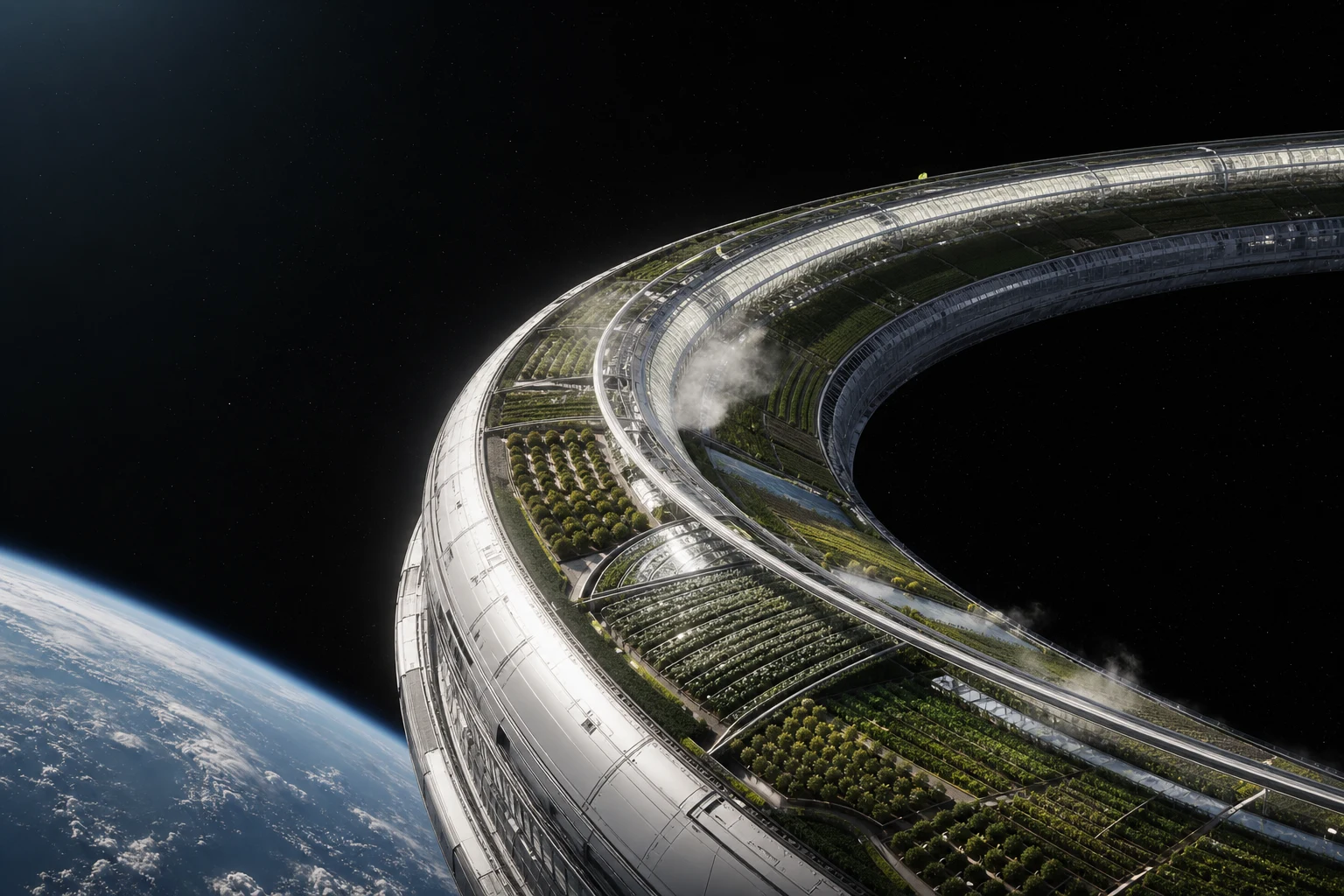
The image I keep returning to is an agricultural field in space. It is not nostalgia for farming and it is not a fantasy of humans doing every task manually. The infrastructure can be robotic. The growth can be vast. The environment can produce things we could never have made inside the limits of the old world.
But somewhere inside that infrastructure is still a gardener: not controlling every leaf, but choosing the ecosystem, tending its direction, and accepting responsibility for the harvest.
That is the future I want to build toward. Not machines replacing human intention, and not humans pretending the machines are only passive tools. A cultivated relationship in which automation expands the possible while people remain responsible for the valuable.